
Executive Summary: The Mission to Redefine UCLA Football
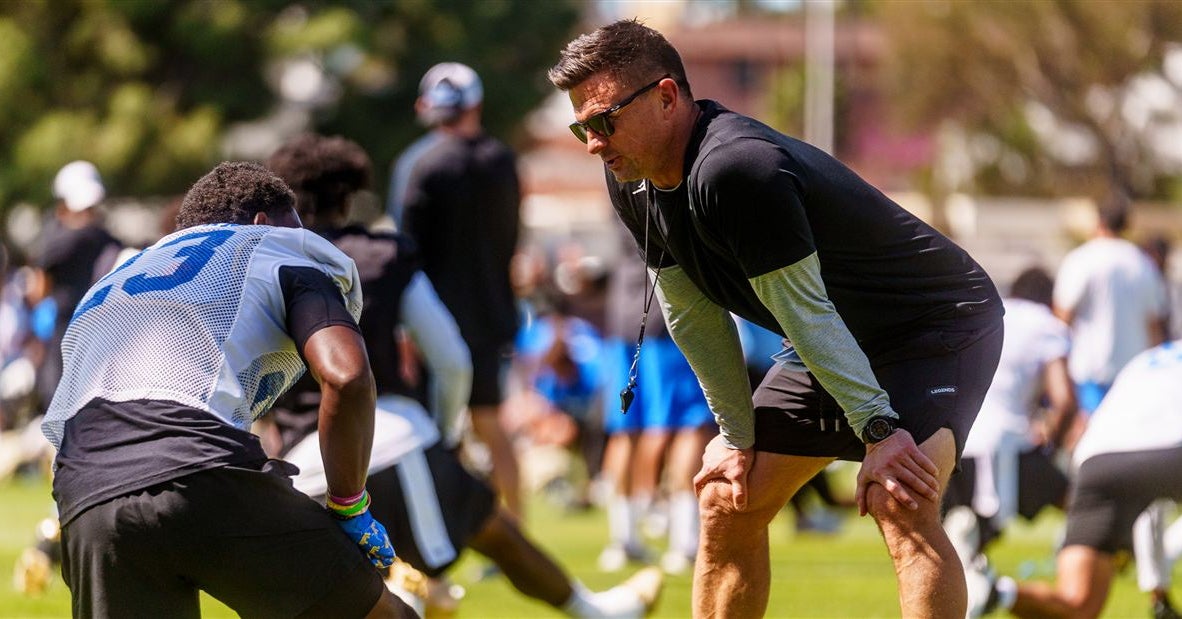
In the rapidly evolving landscape of college football, tradition and talent alone no longer guarantee success. For the UCLA Bruins, entering a new era in the power-packed Big Ten Conference required more than just incremental adjustments; it demanded a fundamental reset. Head coach Bob Chesney has embarked on a calculated mission to reshape UCLA football, recognizing that before a program can consistently win at the highest level, it must establish a clear, resilient identity.
Taking over a program traversing structural transitions and heightened expectations, Chesney's tenure represents a pivot toward discipline, structural alignment, and creative tactical execution. As national interest intensifies around Westwood, football analysts and fans alike are scrutinizing how Chesney plans to elevate the Bruins from middle-tier Big Ten competitors into sustainable championship contenders.
Establishing Culture Before Victory
For decades, college football rebuilds focused primarily on talent acquisition. However, Chesney's philosophy places organizational identity at the absolute center of program development. Observers close to the program note that UCLA's primary hurdle in recent seasons was not a complete lack of athletic skill, but rather an inconsistent game-day persona and a lack of late-game toughness against physical opposition.
Chesney has repeatedly stressed that wins are the byproduct of daily standards rather than lofty postseason promises. By instilling a rigorous, accountability-driven environment, the coaching staff aims to forge a team capable of standing toe-to-toe with traditional Midwest powerhouses.

"Before UCLA football can win, it has to become something again. Culture isn't a slogan you put on the facility wall; it's the standard you enforce when nobody is watching."
This cultural recalibration reaches every aspect of the program, from strength and conditioning regimens to film study habits and locker room leadership structures. Player leadership groups have been given greater ownership over daily operations, ensuring that standard-setting comes from within the roster rather than exclusively from the whistle.
Offensive Blueprint: Creativity and Key Playmakers
Tactically, the Bruins are preparing to unleash a modernized, high-tempo offensive scheme designed to maximize dynamic playmakers while protecting physical line play. Central to this strategy is leveraging high-caliber quarterback play, with dynamic dual-threat capabilities taking center stage in Chesney's game planning.
With Nico Iamaleava featuring prominently in the offensive blueprint, UCLA’s coaching staff is building a system tailored around explosive vertical passing options, quick decision-making, and pre-snap misdirection. The goal is to force opposing defensive coordinators into coverage dilemmas, keeping Big Ten defenses on their heels.
- Quarterback Mobility & Play Action: Utilizing bootlegs and read-option packages to force edge defenders to play laterally.
- Up-Tempo Execution: Limiting defensive substitutions while keeping simple signaling mechanisms to maintain execution speed.
- Positionless Skill Usage: Deploying running backs and tight ends in unconventional formations to create numerical mismatches.
- Balanced Trenches Focus: Integrating aggressive run-blocking schemes to complement the vertical passing attack.

A Proven Track Record of Cultural Turnarounds
Bob Chesney’s arrival at UCLA comes after a remarkable, multi-level coaching trajectory defined by immediate impact and sustained growth. At every previous coaching stop across the collegiate ranks, Chesney demonstrated a unique capability to turn dormant programs into disciplined winning units within short timeframes.
His systematic methodology relies on three distinct pillars:
1. Detailed Evaluation & Role Optimization
Chesney and his staff conduct exhaustive roster evaluations, evaluating players not just on raw athletic metrics, but on tactical adaptability and positional versatility. Players are placed in specific situations where their individual strengths mask team weaknesses.
2. High-Efficiency Special Teams
Throughout his career, Chesney’s units have consistently ranked among the national leaders in special teams metrics. Field position battles, block concepts, and coverage coverage discipline are treated with equal weight to offensive and defensive installations.
3. Relentless In-Game Management
Analytical decision-making during high-stress situational windows—such as fourth-down conversions and clock management—has historically given Chesney-coached teams a distinct tactical edge over broader conference competition.
Navigating the Big Ten Landscape: Challenges and Outlook
The transition into the Big Ten Conference presents immediate structural challenges for UCLA. Traveling across multiple time zones to face physically grueling line play in cold-weather environments requires physical depth and mental resilience unprecedented in West Coast college football history.
Competitors across the conference possess decades of established rivalries and deeply entrenched physical identities. To overcome this, UCLA must rely on tactical agility, superior conditioning, and home-field dominance at the Rose Bowl. Building depth along both the offensive and defensive lines remains the fundamental key to surviving the grueling late-season push.
Industry analysts acknowledge that while immediate conference titles may be a steep expectation in year one, establishing a foundational identity will determine the long-term success of the Chesney era. If the Bruins can consistently demonstrate competitive grit, efficient offensive output, and disciplined execution, UCLA will firmly reposition itself as a dominant force in modern college athletics.
News & Media Credits: Information and media compiled from verified reports by 247Sports, USA Today, and Los Angeles Daily News. Image rights retained by respective publishers.