

Executive Summary: Navigating Pitching Depth and Strategic Priorities
As the Major League Baseball regular season reaches its high-stakes stretch run, pitching management has emerged as the decisive variable for contenders across the league. In San Diego, the evolution of the Padres' starting rotation and bullpen leverage dynamics—highlighted by league-wide interest in elite arms such as Mason Miller and enhanced starting pitching depth—has fundamentally altered the team's postseason calculus. With rotational reinforcement giving manager decisions they haven't enjoyed in recent months, the front office faces a high-class problem: optimizing workload distribution while maximizing elite late-game firepower.
Simultaneously, the strategic interplay between a fortified pitching staff and an explosive lineup powered by Fernando Tatis Jr. and rookie sensation Jackson Merrill has elevated the Padres into dangerous October contenders. Managing high-velocity dynamic weapons alongside starting rotation durability represents the core tactical challenge for San Diego as they position themselves for a deep playoff run.

Key Developments and Pitching Staff Restructuring
Earlier in the campaign, depth was a persistent vulnerability for the Padres' pitching corps. Minor injuries, inconsistent outings, and heavy bullpen workloads strained managerial options during critical inter-divisional series. However, recent rotation additions and returning starters have completely reshaped the pitching equation. Rather than scrambling to fill turn-by-turn assignments, the Padres now navigate an abundance of quality options—a luxury that demands precise rotation management.
The integration of high-leverage arms across Major League Baseball, notably flamethrower Mason Miller whose historic fastball velocity and modern elite movement profiles have captivated front offices across the sport, underscores the growing premium placed on strikeout-heavy pitching combinations. Teams aiming for deep October runs rely heavily on high-leverage bullpen profiles to shorten games, making elite power pitchers pivotal assets in contemporary roster construction.

Verified Statements & Organizational Perspectives
Coaches and front-office analysts emphasize that managing surplus starting capability is far preferable to navigating structural rotation shortages, though it introduces unique operational challenges.
"Having more quality starting arms than available rotation slots forces high-level competition and accountability, but it requires transparent communication and precise workload monitoring to ensure everyone stays sharp for postseason baseball," noted baseball operations analysts evaluating San Diego's strategic balance.
The stabilization of the rotation directly impacts bullpen usage. By getting deeper starts from a revamped rotation, relief pitchers avoid over-saturation in low-leverage scenarios, preserving their maximum velocity and sharp breaking pitches for high-stress late-inning jams.
Offensive Catalyst: Tatis Jr. and Merrill Powering the Engine
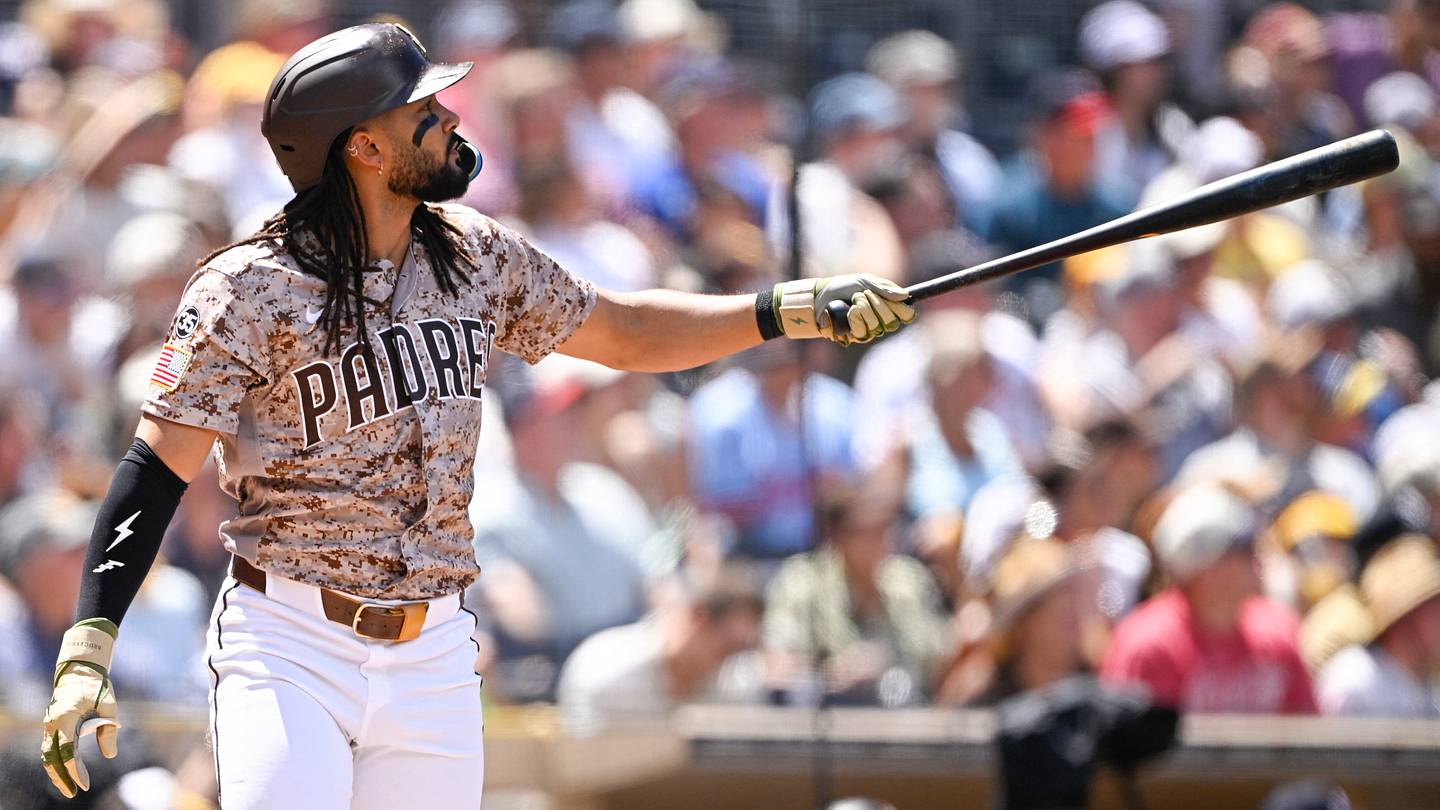
While pitching stability establishes the team's floor, power hitting dictates its ceiling. The ongoing power display from Fernando Tatis Jr. alongside rookie standout Jackson Merrill has provided San Diego with explosive run support. Tatis, playing with trademark energy and elite exit velocities, has consistently delivered clutch home runs in crucial late-game moments.
Complementing Tatis is Jackson Merrill, whose breakout campaign has solidified the center of the order. Merrill's ability to drive extra-base hits while displaying veteran plate discipline has lengthened the Padres' batting order, ensuring opposing pitchers find no respite throughout the game.
- Rotational Stability: Consistent six-to-seven inning outings reduce strain on primary setup relievers.
- High-Velocity Leverage: Elite relief profiles modeled around power arms like Mason Miller shut down opposition comeback attempts in the 8th and 9th innings.
- Balanced Offense: Power contributions from Tatis Jr. and Merrill create multi-run cushions early in games.
Strategic Analysis & Future Outlook
Looking ahead, the Padres' coaching staff must navigate several key decisions before playoff rosters lock. Transitioning surplus starting pitchers into multi-inning relief roles could provide San Diego with a distinct tactical advantage during short series. Modern postseason success increasingly hinges on short-relief flexibility, where dominant starters transition to middle-relief firemen to bridge gaps to the closer.
Furthermore, monitoring player fatigue will remain essential. Balancing high-velocity usage with structural rest ensures that key arms remain healthy when elimination games arrive. If San Diego maintains its rotational health and offensive momentum, the team presents one of the most complete roster profiles in the National League.
News & Media Credits: Information and media compiled from verified reports by MLB.com, San Diego Union-Tribune, and Friars on Base. Image rights retained by respective publishers.