

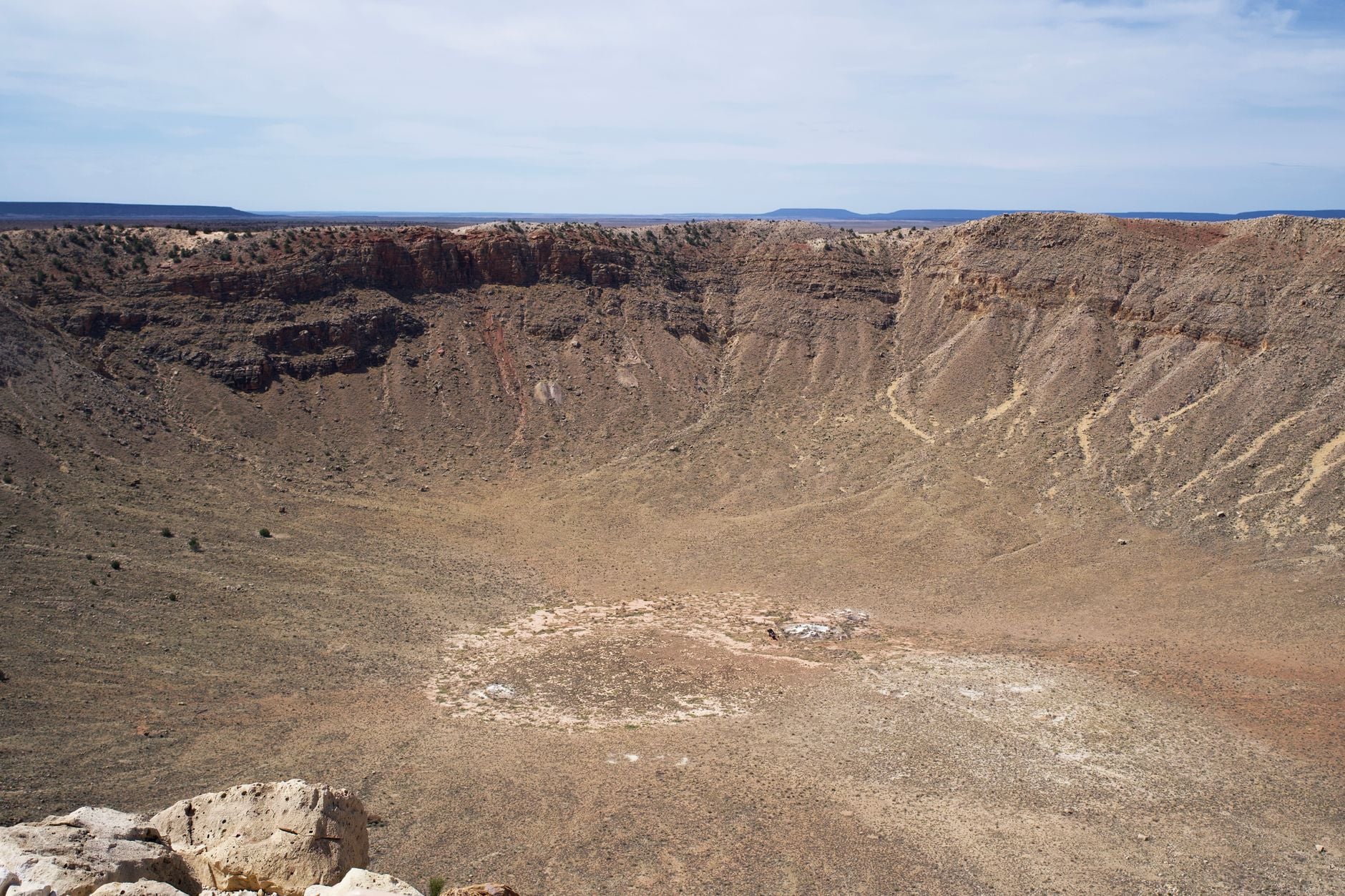
Executive Summary: A Dramatic Skyfall Reveals Extraterrestrial Chemistry
In a dramatic convergence of suburban life and cosmological history, scientific analysis of a rare meteorite that crashed through the roof of a residential home in Hillsborough, New Jersey, has revealed astounding results. Researchers examining the dense space rock have discovered hundreds of distinct organic compounds, specifically amino acids—the molecular building blocks necessary for life as we know it.
Remarkably, peer-reviewed laboratory investigations indicate that the majority of these amino acids do not occur naturally anywhere on Earth. The discovery provides researchers with an unprecedented glimpse into the complex chemical reaction pathways that operated in deep space prior to the formation of our planet, offering tangible evidence that the chemical ingredients for life are widespread throughout the cosmos.
The Hillsborough Event: From Skyfall to High-Tech Laboratory Analysis
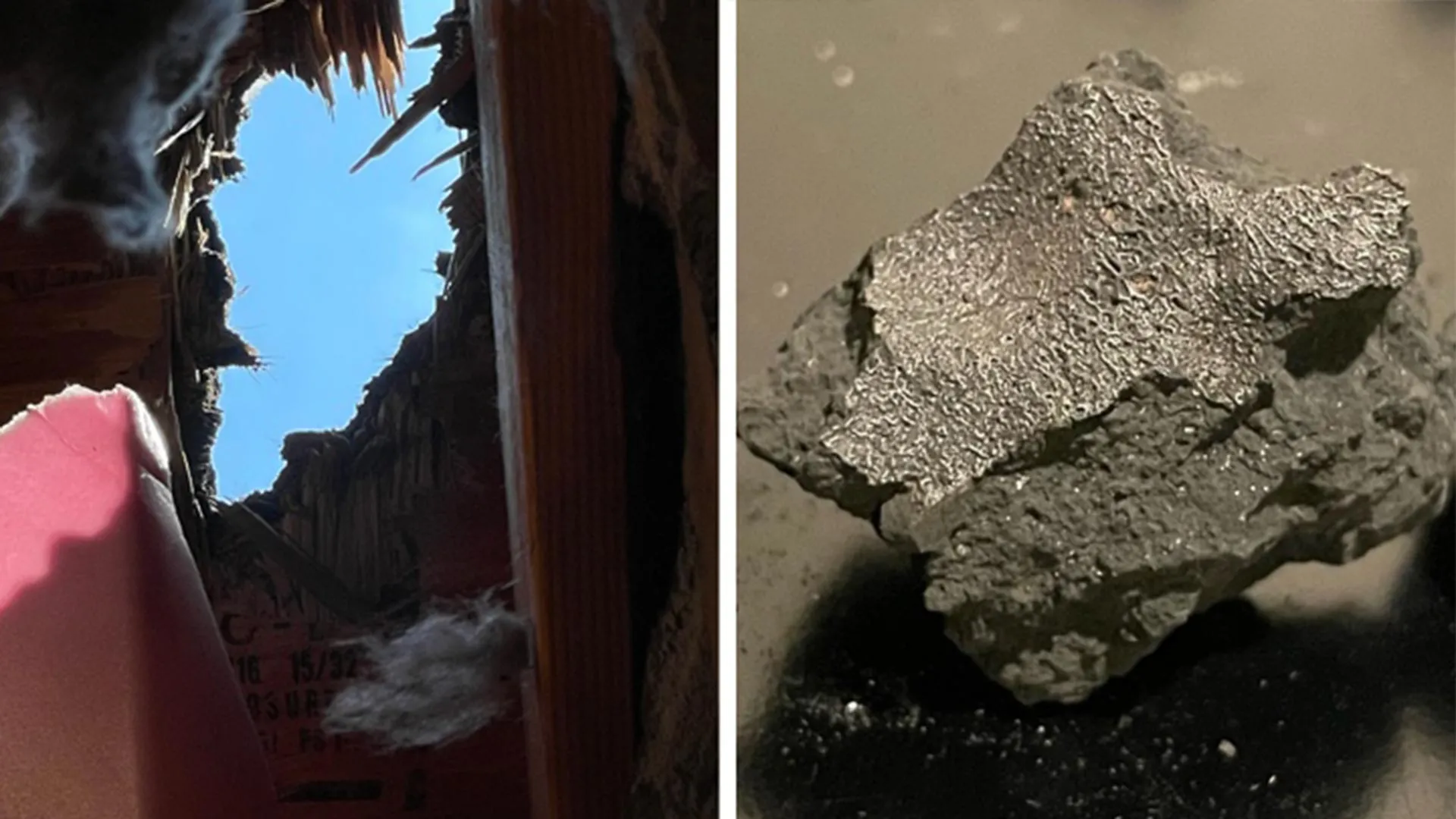
The remarkable saga began when the celestial fragment unexpectedly pierced the roof and bedroom ceiling of a family home in Hillsborough, New Jersey. The impact produced a sudden acoustic shockwave and minor structural damage, prompting local authorities and geoscientists to immediately secure the site. Because the specimen was recovered almost instantly following its atmospheric entry, terrestrial contamination was kept to an absolute minimum—a crucial factor that allowed researchers to preserve the pristine molecular signatures held within its dark crust.
Upon physical recovery, the space rock was transferred to specialized cleanroom facilities equipped with state-of-the-art mass spectrometers and chromatographic separation instruments. Subsequent laboratory testing confirmed that the object is a carbonaceous chondrite, an exceedingly rare class of stony meteorite renowned for containing primitive solar system materials, volatile compounds, and water-rich minerals intact for over 4.5 billion years.
Unlocking Prebiotic Chemistry: Hundreds of Novel Amino Acids Discovered
The core breakthrough stems from the extraction and molecular identification of organic compounds embedded deep within the meteorite's interior matrix. Scientific teams successfully extracted and cataloged hundreds of distinct amino acid structures. While terrestrial biology primarily utilizes a standardized set of 20 amino acids to synthesize proteins, the Hillsborough sample contains an immense diversity of non-proteinogenic variants.
Key scientific takeaways from the chemical breakdown include:
- Extraterrestrial Origin Confirmed: Stable isotope ratios of carbon, nitrogen, and hydrogen within the detected amino acids conclusively prove they did not originate from terrestrial soil or atmospheric contamination.
- Unprecedented Diversity: Scientists identified several hundred unique amino acid isomers, vastly exceeding the structural variety typically observed in biological organisms on Earth.
- Exotic Chemical Structures: The vast majority of the isolated compounds represent molecular configurations that are virtually non-existent in Earth's natural biosphere.
- Chirality and Symmetry: Molecular symmetry analyses revealed nearly equal mixtures of left-handed and right-handed enantiomers, further substantiating that these compounds formed through abiotic chemical processes in outer space rather than biological activity.
"Finding hundreds of distinct amino acids—most of which do not exist naturally on Earth—proves that organic chemistry in the early solar system was vastly more rich and complex than previously envisioned," noted researchers participating in the multi-institutional analysis.
Contextual Background: Prebiotic Evolution and the Origins of Life
The implications of the Hillsborough discovery extend far beyond the immediate geographic boundaries of New Jersey. For decades, astrobiologists have debated the fundamental origins of life on Earth. A leading hypothesis, known as prebiotic delivery or panspermia, suggests that primordial oceans on early Earth were seeded with organic molecules delivered via relentless asteroid and comet impacts during the Late Heavy Bombardment phase billions of years ago.
Finding such an extraordinary array of non-terrestrial organic molecules inside a freshly fallen meteorite reinforces the concept that space itself serves as an efficient factory for complex carbon chemistry. Solar radiation, cosmic rays, and low-temperature chemical reactions operating on ice-coated interstellar dust grains can generate delicate organic compounds. When these icy grains coalesce into parent asteroids, hydrothermal altered environments inside those bodies further refine and synthesize diverse amino acids.
Strategic Implications & What Happens Next
The discovery of non-earthly amino acids in the Hillsborough specimen aligns with data recently retrieved from robotic space missions, such as NASA's OSIRIS-REx mission to asteroid Bennu and JAXA's Hayabusa2 mission to asteroid Ryugu. However, while space missions yield only tiny milligram-scale samples at astronomical costs, naturally delivered space rocks like the Hillsborough meteorite afford researchers larger quantities of material for exhaustive physical testing.
Moving forward, research consortiums plan to perform advanced crystallographic studies and ultra-high-resolution orbital trap mass spectrometry to map the exact spatial distribution of these amino acids within the rock's matrix. Scientists hope to determine whether liquid water activity on the parent asteroid influenced the synthesis of these compounds, which could help narrow down where similar conditions might exist today—such as beneath the icy crusts of Jupiter's moon Europa or Saturn's moon Enceladus.
News & Media Credits: Information and media compiled from verified reports by ITVX, Space Daily, and ScienceDaily. Image rights retained by respective publishers.